Chalking and Fading: Why Some Metal Coatings Fail While PVDF Stands Firm
Metal roofing is known for its strength, longevity, and clean appearance. However, not all metal roofs age the same way. Over time, some roofs lose their color, develop a dull, powdery residue, or begin to look worn long before the metal itself reaches the end of its service life. These visible changes are usually the result of chalking and fading, two of the most common signs that a metal coating is failing.
Understanding why chalking and fading occur is essential for architects, builders, and property owners who want a roof that performs well and looks good for decades. Preventing chalking and fading in metal roofing starts with choosing the right coating system and understanding how environmental exposure affects long-term performance. Among available options, PVDF coatings consistently stand out for their ability to resist these common failures.
Understanding Chalking and Fading in Metal Roofing
Chalking and fading are surface-level issues, but they signal deeper changes in the coating itself. While they may begin as cosmetic concerns, they can eventually impact maintenance costs, building appearance, and long-term value.
Chalking occurs when a coating begins to break down and release pigment particles onto the surface. This creates a fine, powdery residue that can rub off when touched. Fading refers to the gradual loss of color intensity due to prolonged exposure to sunlight and weather. These issues often appear together because they share the same underlying causes.
Preventing chalking and fading in metal roofing requires an understanding of how coatings interact with UV radiation, moisture, temperature changes, and airborne pollutants over time.
Why Metal Roof Coatings Fail Over Time
Not all metal coatings are designed for long-term exposure to harsh outdoor conditions. Many failures occur because the coating lacks the chemical stability needed to withstand years of environmental stress.
UV Exposure and Chemical Breakdown
Sunlight is one of the most destructive forces acting on metal roof coatings. Ultraviolet radiation breaks down the chemical bonds that hold coatings together. When these bonds weaken, the coating begins to deteriorate at the molecular level. Pigments lose their protection, leading to visible fading and chalking.
Lower-grade coatings often rely on weaker resin systems that cannot resist prolonged UV exposure. As a result, the surface degrades unevenly, leaving roofs with blotchy color and a dull finish.
Moisture and Environmental Stress
Rain, humidity, and condensation accelerate coating breakdown, especially when combined with UV exposure. Moisture penetrates microscopic cracks in the coating, further weakening its structure. In areas with frequent rain, snow, or freeze-thaw cycles, this process happens faster.
Airborne pollutants also play a role. Industrial emissions, vehicle exhaust, and salt in coastal environments introduce chemicals that react with the coating surface. Over time, these reactions contribute to chalking, fading, and loss of gloss.
Thermal Expansion and Contraction
Metal roofing expands and contracts as temperatures change. Coatings must be flexible enough to move with the metal substrate. When a coating lacks flexibility, repeated thermal movement causes microfractures. These fractures expose pigments and resins to the elements, accelerating deterioration.
Preventing chalking and fading in metal roofing depends on using a coating that can maintain chemical stability and flexibility over decades of thermal cycling.
 The Role of Resin Systems in Coating Performance
At the heart of every metal roof coating is its resin system. The resin binds pigments together and anchors the coating to the metal surface. It also determines how well the coating resists UV radiation, moisture, and chemicals.
Common resin types include polyester, silicon-modified polyester, and PVDF (more commonly known as KYNAR or HYLAR). While each has its place, they vary significantly in performance and longevity.
Polyester coatings are often used for budget-conscious projects. They offer acceptable short-term performance but tend to fade and chalk more quickly under prolonged sun exposure.
Silicon-modified polyester coatings improve on standard polyester by adding durability and gloss retention. However, they still fall short in environments with intense UV exposure or pollution.
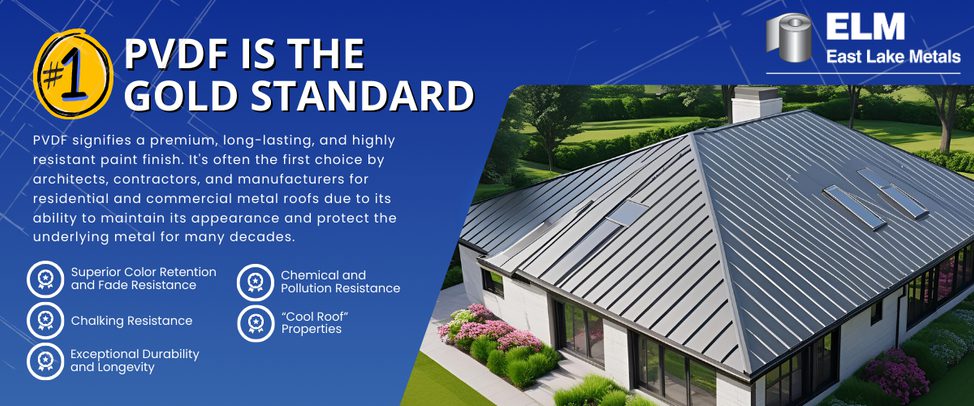
PVDF coatings use a fluoropolymer resin that creates exceptionally strong chemical bonds. These bonds are highly resistant to UV radiation and environmental stress, making PVDF the preferred choice for long-term performance.
Why PVDF Coatings Stand Firm Against Chalking and Fading
PVDF coatings are engineered specifically to address the weaknesses found in other coating systems. Their molecular structure provides a level of stability that is difficult to achieve with conventional resins.
The Science Behind PVDF Durability
PVDF, or polyvinylidene fluoride, contains strong carbon-fluorine bonds. These bonds are among the most stable in polymer chemistry. They resist breakdown when exposed to UV radiation, moisture, and airborne chemicals.
Because the resin itself remains stable, the pigments embedded within the coating are better protected. This results in superior color retention and minimal chalking over time. Preventing chalking and fading in metal roofing is one of the primary reasons PVDF coatings are specified for high-performance projects.
Long-Term Color Retention
One of the most visible advantages of PVDF coatings is their ability to maintain color consistency for decades. While other coatings may fade noticeably within ten to fifteen years, PVDF-coated panels often retain their original appearance for much longer.
This consistent color retention is especially important for large commercial buildings, architectural projects, and properties where appearance plays a role in brand image or resale value.
Resistance to Harsh Environments
PVDF coatings perform exceptionally well in environments that accelerate coating failure. High-sun regions, industrial zones, and coastal areas place intense demands on roofing materials. PVDF’s resistance to UV radiation, chemicals, and salt exposure makes it well suited for these conditions.
By maintaining surface integrity, PVDF coatings help ensure that metal roofs remain visually appealing and structurally protected throughout their service life.
How Chalking and Fading Impact Building Performance
While chalking and fading are often viewed as cosmetic issues, their effects extend beyond appearance. As coatings degrade, they become less effective at protecting the metal substrate beneath.
A deteriorating coating allows moisture and contaminants to reach the metal surface more easily. Over time, this can contribute to corrosion, increased maintenance needs, and reduced lifespan of the roof system.
Preventing chalking and fading in metal roofing helps preserve the protective barrier that coatings are designed to provide. This translates into fewer repairs, more predictable maintenance schedules, and lower long-term costs.
Common Signs of Coating Failure to Watch For
Early identification of coating failure allows building owners to plan maintenance or replacement before more serious issues develop. Some signs are subtle, while others are easy to spot during routine inspections.
- A powdery residue on the roof surface or gutters
- Noticeable fading or uneven color across panels
- Loss of surface gloss or a dull appearance
- Streaking on walls below roof edges
- Increased difficulty cleaning the roof surface
These indicators often point to chalking and fading caused by coating breakdown. Addressing them early can prevent further deterioration.
Comparing PVDF to Other Coating Options
Choosing the right coating requires balancing performance, cost, and project goals. While initial costs may vary, long-term value often favors higher-performing systems.
Polyester and silicon-modified polyester coatings can be suitable for shorter-term applications or less demanding environments. However, they typically require more frequent maintenance and may need repainting or replacement sooner.
PVDF coatings are often specified for projects where longevity and appearance are priorities. Their ability to resist chalking and fading reduces the need for intervention and extends the useful life of the roof.
Preventing chalking and fading in metal roofing often means looking beyond upfront costs and focusing on total lifecycle performance.

Environmental and Maintenance Considerations
Metal roofing is often chosen for its sustainability benefits. Long service life, recyclability, and energy efficiency all contribute to its environmental appeal. Coating choice plays a critical role in maximizing these benefits.
PVDF coatings support sustainability by reducing the frequency of recoating or replacement. Fewer interventions mean less material waste and lower resource consumption over time. Many PVDF finishes also include reflective pigments that help reduce heat absorption, improving energy efficiency. These energy-efficient and durable qualities can also contribute to LEED certification, helping building owners earn points for sustainable design and operation.
From a maintenance standpoint, PVDF-coated roofs typically require only periodic cleaning and visual inspections. The stable surface resists dirt buildup and staining, making it easier to maintain a clean appearance.
Planning for Long-Term Performance
Selecting a metal roof coating should involve long-term planning. Climate, building use, and aesthetic goals all influence the best choice. Understanding how coatings behave over time allows stakeholders to make informed decisions that align with their expectations.
When preventing chalking and fading in metal roofing is a priority, PVDF coatings provide a proven solution. Their performance history across decades of real-world use demonstrates their reliability in a wide range of applications.
Architects and builders often specify PVDF coatings for projects where consistency, durability, and low maintenance are essential. Property owners benefit from a roof that maintains its appearance and protective qualities long after installation.
Key Factors to Consider When Choosing a Coating
Before selecting a coating system, it is important to evaluate several performance-related factors. These considerations help ensure the coating matches the demands of the project and environment.
- Expected exposure to sunlight and UV radiation
- Local climate conditions, including moisture and temperature swings
- Proximity to industrial pollutants or coastal salt air
- Desired lifespan and maintenance expectations
- Importance of long-term color consistency
Evaluating these factors makes it easier to choose a coating that delivers reliable results over time.
Why Preventing Chalking and Fading Matters
Chalking and fading are more than aesthetic concerns. They reflect the durability of the coating system and its ability to protect the metal beneath. When coatings fail prematurely, the costs extend beyond appearance to include maintenance, repairs, and potential replacement.
Preventing chalking and fading in metal roofing ensures that the roof continues to perform as intended. It protects the investment made in the building and supports long-term value retention.
PVDF coatings address the root causes of coating failure rather than masking the symptoms. Their chemical stability, UV resistance, and proven track record make them a trusted choice for demanding applications.
Choosing a Smarter Path Forward
Understanding why some metal coatings fail while others stand firm is key to making informed roofing decisions. Chalking and fading result from chemical breakdown, environmental exposure, and insufficient resin performance. Over time, these issues compromise both appearance and protection.
PVDF coatings stand apart because they are engineered to resist the forces that cause coating failure. Their ability to maintain color, resist chalking, and perform in harsh environments makes them a reliable solution for long-term projects. Preventing chalking and fading in metal roofing is not just about aesthetics. It is about durability, value, and confidence in the roof’s performance.
For those seeking high-quality metal panels with proven coating options, East Lake Metals provides the expertise and product knowledge needed to support long-term performance goals. Our team has expert knowledge and can help guide coating selection, answer technical questions, and ensure projects are equipped with materials designed to withstand challenging environments. By working with East Lake Metals and choosing the right coating from the start, building owners and professionals can invest in a roof that stands firm for decades to come. Contact our team today to discuss if PVDF is the right choice for your project.